
Ice maker repair, in the fridge or under the counter.
Beaver Appliance repairs ice makers that stop, leak or make small cubes, in refrigerators, under counters and in small businesses. One flat fee finds the fault, credited to the repair, and nothing is done until you approve a written price.
Call or text and we’ll give you the earliest time we have.
- Diagnostic fee
- Flat, credited to the repair
- Price
- In writing, before any work
- Warranty
- Written, on every repair
- Google rating
- 5.0 from 14 reviews
Ice maker repairs, in customers’ words
Samsung ice maker
“Brandon was relentless until he resolved the issue with my ice maker on my Samsung Refridge/Freezer. Brandon was polite and very good about communicating with meintil the issue was resolved! Highly recommend his services”
★★★★★ Jane G. Aug 2026, Google review Refrigerator
“… The technician took the time to diagnose the problem properly and had everything back up and running. …”
★★★★★ Joey C. Sep 2026, Google review
Ice makers we repair
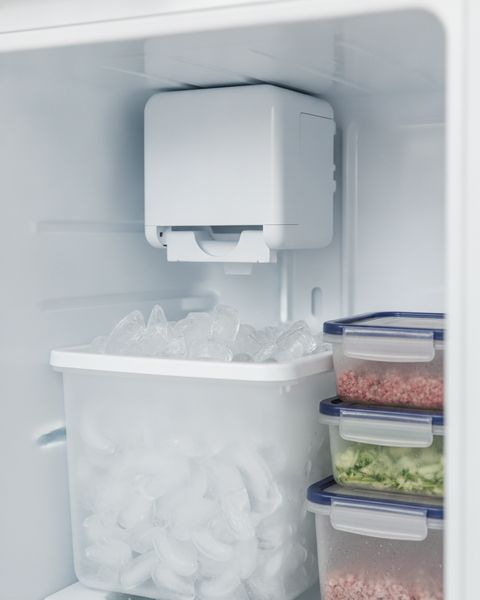
In the freezer The ice maker and bin of a refrigerator, Frigidaire, Whirlpool and GE among them. 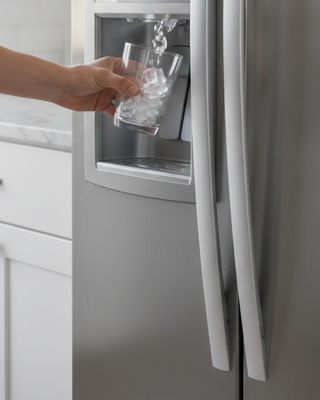
In the door Dispenser models, and French doors that make ice in the fridge section, Samsung among them. 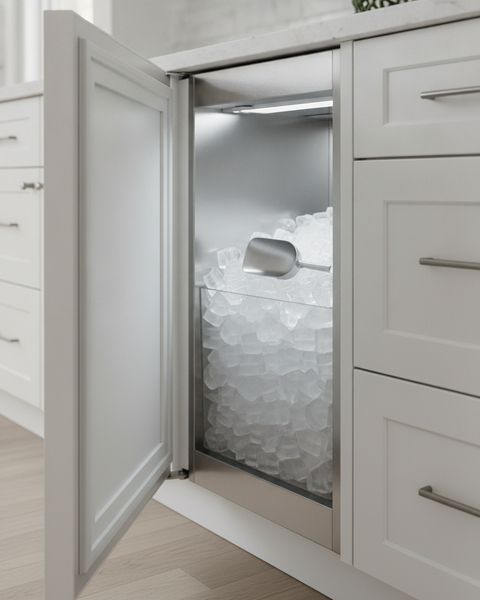
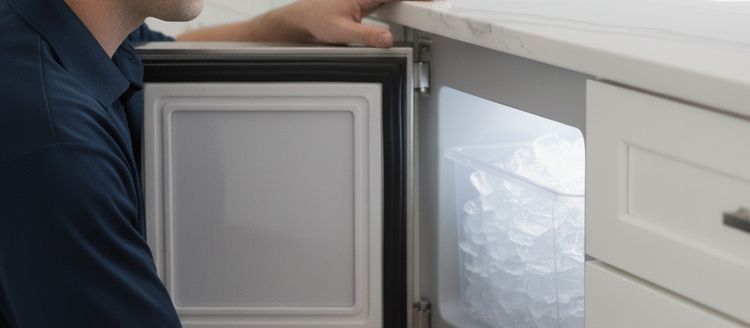
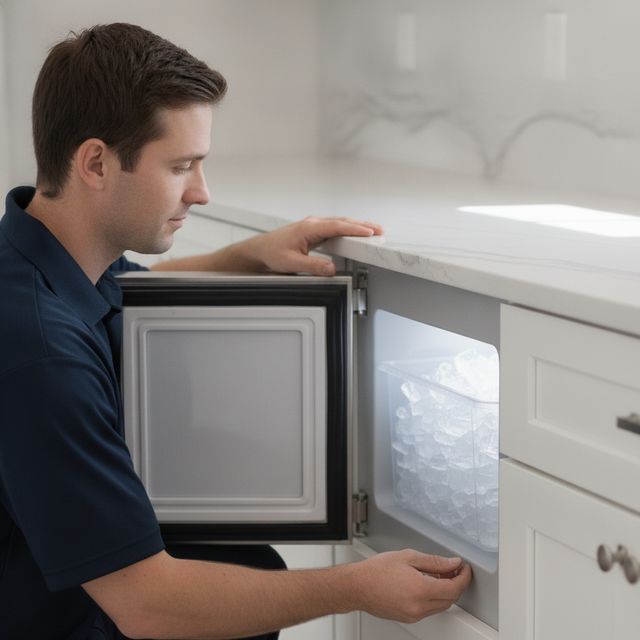
Built in, under the counter Clear-ice and cube makers in kitchens and bars, including KitchenAid and Sub-Zero. 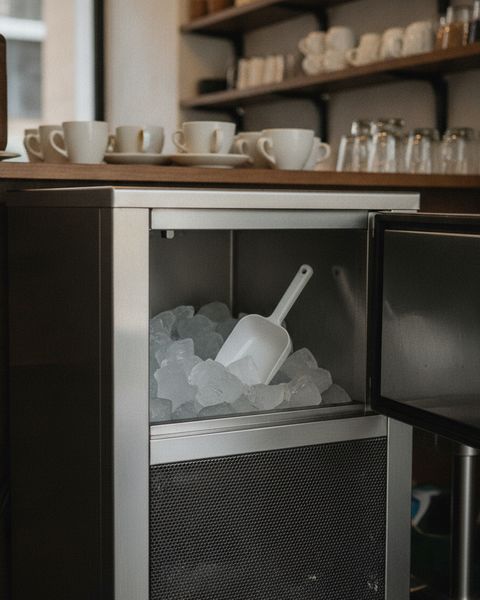
Business ice machines Plug-in machines in cafés, bars and shops; for anything larger, call and ask first.













What is your ice maker doing?
Open a row for possible causes and the first checks the makers suggest. Most refrigerator ice makers run the cycle in the drawing.
- A valve lets in just enough water to fill the mold.
- The freezer’s cold air freezes it; the ice maker makes no cold of its own.
- At about 15°F, GE says, a thermostat starts the harvest.
- A heater under the mold loosens the cubes.
- Ejector blades push them into the bin, and the mold refills.
- A feeler arm stops the next harvest while the bin is full.
A refrigerator ice maker from the side, after GE; drawn by us, simplified. KitchenAid’s clear-ice machines run water over a freezing plate instead.
No ice at all

Possible causes: the ice maker switched off or its arm raised, no water reaching it, or a freezer warmer than 0°F, which Samsung says stops ice even with the ice maker in the fridge section. On built-ins, Whirlpool adds a kinked drain hose or a blocked bin sensor.
Check first: ice maker on, arm down, supply valve open. A new one takes time: see the questions below.
Slow ice

Possible causes: GE’s normal is 7 cubes every 70 to 80 minutes. Slower can mean a clogged filter, an ice maker warmer than 15°F, a nearly empty freezer or a restricted line, GE says; built-ins slow down in rooms above 90°F, Whirlpool says.
Check first: the filter’s age and the freezer setting. A built-in makes its own cold, so a diagnosis may also find a sealed-system fault, which we explain.
Small, hollow or mushy cubes

Possible causes: low water pressure, Samsung says. GE adds a clogged filter, a slow fill and a freezer colder than -10°F.
Check first: the pressure at the supply and any reverse osmosis filter, as the water section explains.
Leaking or overflowing

Possible causes: a split fill line, a valve stuck open, or pressure high enough to overfill the tray, for which LG suggests a regulator. KitchenAid’s clear-ice machines drain after every cycle, so on a built-in the drain line matters too.
Check first: if water keeps coming, switch the ice maker off and close its supply valve until it’s looked at.
Ice that tastes or smells off

Possible causes: GE points to open food in the freezer, old ice that has soaked up smells, the water supply and an old filter.
Check first: throw the ice out and give it 24 hours to make more, then empty the bin every 2 to 4 weeks, as Whirlpool suggests.
Clumped ice or a jammed dispenser

Possible causes: a full bin’s weight fuses the bottom cubes, GE says, and a nearly empty freezer lets them melt and refreeze. Samsung adds that clumps can make the ice maker think the bin is full.
Check first: dump the ice every other week, as Samsung advises, and free a jammed chute with a wooden spoon, as GE suggests.
Frozen over with a sheet of ice

Possible causes: Samsung says its ice makers defrost themselves, so one frozen over means that function has stopped and it needs service.
Check first: don’t force a stuck bin or warm it with a hair dryer; Samsung says that can damage the ice maker.
Hands clear
Keep your fingers out of an ice maker while it has power: GE warns of the moving ejector and the heater under the mold. Valves, wiring and the sealed system are a technician’s work.
How the price works
The fee finds the fault. You see the repair price in writing and decide before any work starts.
Tell us what it’s doing
Call or text us. The brand and the symptom are enough to start.
We find the fault
For one flat diagnostic fee, credited to the repair if you go ahead.
Get the price in writing
Before any work starts. No repair until you say yes.
We fix it
Only the work you approved, at the price you approved.
Get a written warranty
On every repair, with the terms spelled out.
How pricing works Our warranty terms
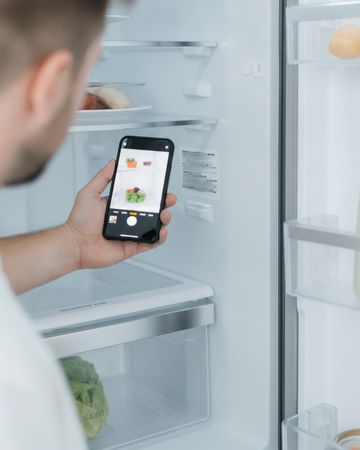
Text us the model sticker first
For an ice maker in a refrigerator, send the refrigerator’s own sticker. On a built-in machine, open the door and look on the inside walls: KitchenAid puts the model number inside the ice maker, Whirlpool on the right of the bin.
Text a photo to (754) 285-8880Small cubes can start at the water line
Each maker sets its own water pressure range, and a reverse osmosis filter can pull the supply below it.
- Reverse osmosis can halve it. GE’s example: 60 psi in, about 30 out, low enough for small or hollow cubes and a dispenser that jams more often.
- A 20-second test. Under 8 ounces from the dispenser in 20 seconds, GE says, the flow is probably too low.
- Often a plumbing matter. GE calls a restricted line a plumbing issue, and Samsung sends owners with low RO pressure to a plumber.
Ice maker repair questions
Still wondering about your ice? Call (754) 285-8880 Text a photo
How long does a new ice maker take to start making ice?
GE says to allow up to 24 hours before its ice makers begin cycling. Whirlpool expects a batch about every three hours once the freezer is cold, up to three days to fill the bin, and 72 hours before full production.
Can a reverse osmosis filter cause small or hollow ice cubes?
It can. In GE’s example, a reverse osmosis system cuts a 60 psi supply to about 30, low enough for small or hollow cubes and a dispenser that jams. Each maker sets its own range; on its refrigerators with a filter, GE says pressure below 40 psi can mean hollow cubes or slow ice.
Can I run vinegar through my ice maker to clean it?
Use the cleaner your manual names, since makers specify their own. GE warns against cleaning a standalone ice maker with anything containing petroleum distillates, detergent, bleach or ammonia, because they can damage it.
How often should a built-in or business ice machine be cleaned?
As often as its maker says, and makers differ. KitchenAid says minerals build up as scale, and with hard water its clear-ice system may need cleaning as often as every 9 months; Whirlpool says to clean its machines when the cleaning light comes on after 9 months, or sooner if ice production drops sharply. For businesses, the FDA’s model Food Code asks for cleaning at the frequency the manufacturer specifies.
Is it worth fixing an ice maker?
For a refrigerator’s ice maker, the refrigerator’s age is the real question. Consumer Reports (updated January 2024) counts ice makers among the most common refrigerator problems, though not necessarily the most serious or costly to repair, and finds a refrigerator under 10 years old is usually worth fixing. The diagnosis gives you a written price to weigh.
How much does an ice maker repair cost?
The price follows the fault, so Beaver Appliance finds the fault first, for one flat diagnostic fee that is credited if you go ahead with the repair. You then get the price in writing and decide; every repair carries a written warranty.
Related repairs
Where we work
Beaver Appliance repairs ice makers across South Florida: Broward County and nearby parts of Miami-Dade and Palm Beach counties. We’re based in Pompano Beach.